Friday, March 25, 2011

Did You Know: Rag Paper vs Wood Pulp Paper

Excerpted from http://www.cycleback.com/printsexamination/sixteen.html

Rag versus wood pulp.In the early history paper was made from rags.Starting about the mid 1800s, rag pulp began to be replaced by wood pulp.Wood became a popular choice due to the scarcity of rags and because wood pulp paper was cheaper to manufacture.The first successfully made American wood pulp paper was manufactured in Buffalo, New York, in 1855. By 1860, a large percentage of the total paper produced in the U.S. was still rag paper. Most of the newspapers printed in the U.S. during the Civil War period survived because they were essentially acid-free 100% rag paper, but the newspapers printed in the late 1880s turn brown because of the high acid content of the wood pulp paper. In 1882, the sulfite wood pulp process, that is still in use today, was developed on a commercial scale and most of the high acid content paper was used thereafter in newspapers, magazines and books.

Counterintuitively, modern paper, especially in books, letters and newspapers, is much more likely to turn brown and brittle than paper from before the American Civil War. For the beginning collector, the paper on an early 1800s print can be surprisingly fresh and white.

Labels: , , , ,

Thursday, March 17, 2011

Consering and Preserving Documents and Artifacts at the Imperial War Museum

All of these images are from the conservation lab at the Imperial War Museum

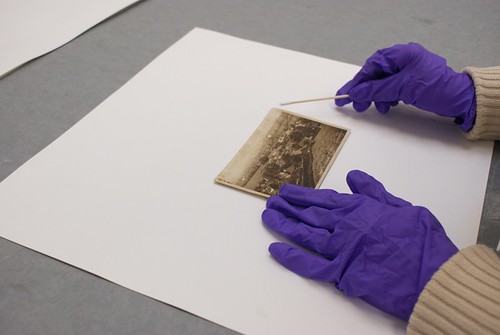
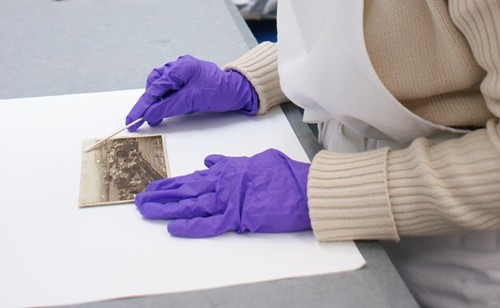
Cleaning a photo

Cleaning a photo
To clean the surface of the photo, Tina carefully rolls (never rubs) a swab across it to pick up any dirt or dust.

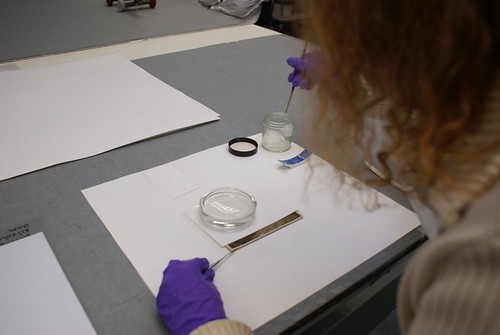
Repairing a photo

Repairing a photo
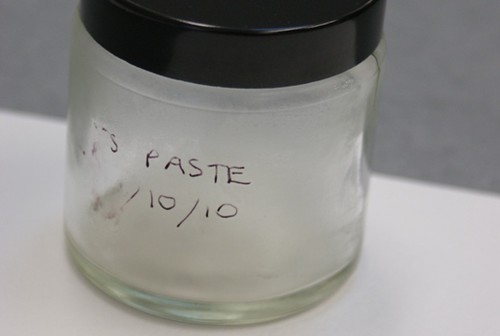
Any small rips or tears in the photographs are repaired using wheat starch paste

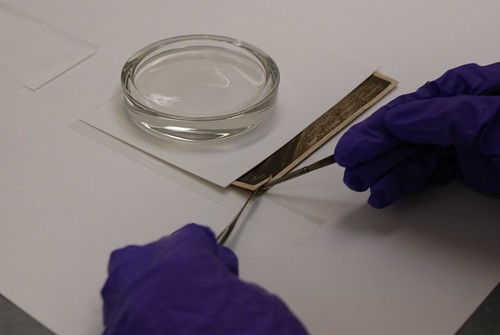
Repairing a photo step 2

Repairing a photo step 2
The paste is applied to the card mount, not the underside of the photo surface, so that the card can absorb the excess moisture in the paste.

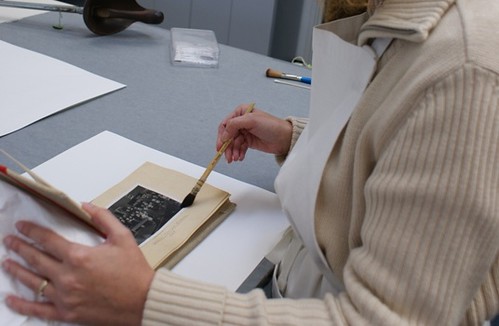
Photo consevation in action

Photo consevation in action
Conservator Tina Kelly working on a photo album that will appear in the exhibition. The cushion is used to support the cover of the album when condition reporting. Without the cushion, which is actually more like a bean bag that can be squished the required shape, the spine could break.

Get yer gloves on!

Get yer gloves on!
Gloves must be worn when handling photographs as fingerprints can damage the gelatine that forms the surface of the photo.

Wheat starch paste

Wheat starch paste
Don't eat this in class...

------------

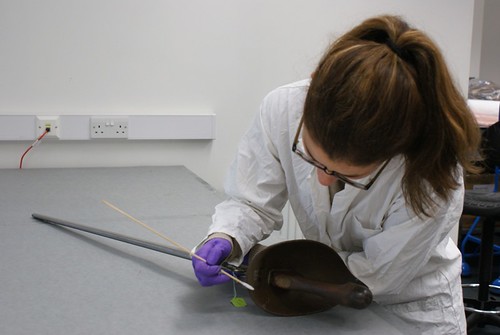
Sword cleaning

Sword cleaning
Conservator Heidrun Gassner cleans a British cavalry sword, dating from around 1908, with a solvent (acetone) to remove any grease.

Sponge bath

Sponge bath
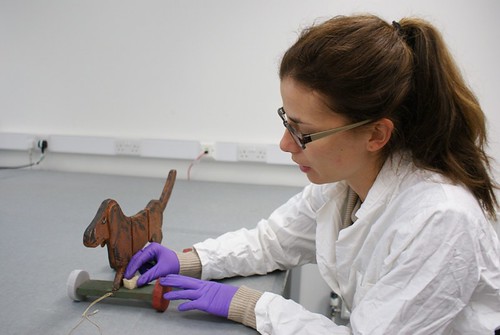
However, acetone should not be used on painted surfaces. Instead, a sponge is used to clean off any surface dirt.

--------------

Tearing

Tearing
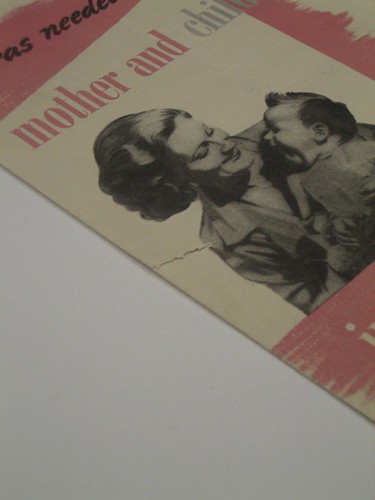
Old paper is fragile and easily damaged, so any tears must be repaired before an item is handed over to the Exhibitions team for installation in a showcase.

Repairing

Repairing
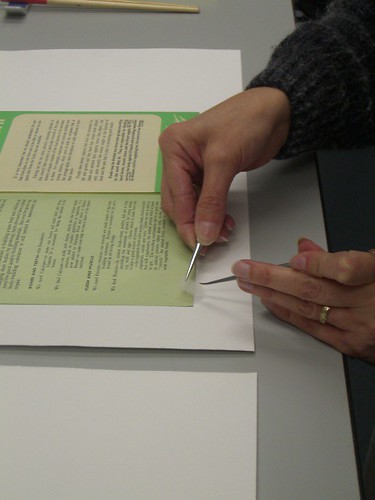
Tina Kelly is using wheat starch paste to attach Japanese Tengujo tissue to repair a small rip at the edge of this pamphlet. The tissue acts like sticky tape, preventing the tear from ripping further into the page.

Cleaning

Cleaning
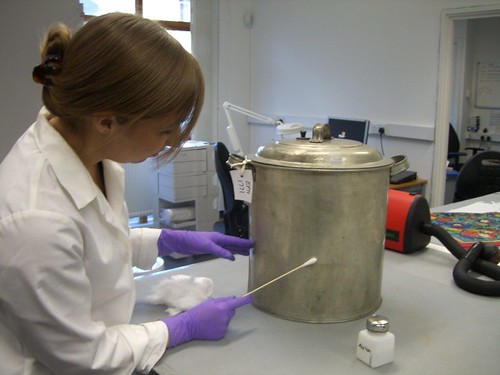
When bringing the boiler out of storage, the Conservation team found that someone had covered the entire surface in sticky grease and wrapped it in greaseproof paper. Joanna Cook, above, has been hard at work with a bottle of acetone and a cotton swab, removing the grease and getting the boiler ready for display.

Museum Vac in action!

Museum Vac in action!
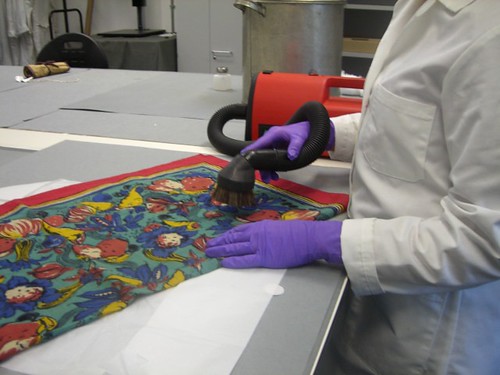
Looking after fabrics requires careful work. The scarf has to be carefully vacuumed using a special low suction ‘Museum Vac’ to remove dust and any remnants of old pest damage. Dust is particularly harmful to fabric - it can attract pests, can cause staining and can damage delicate fibres.

Labels: , , , , , , ,